


Samurai Mode Jacket -Standard model -
The straight line of haori, for how people layer now.
See the Jacket on its own


Samurai Mode / Made to Order
Three pieces. One silhouette.
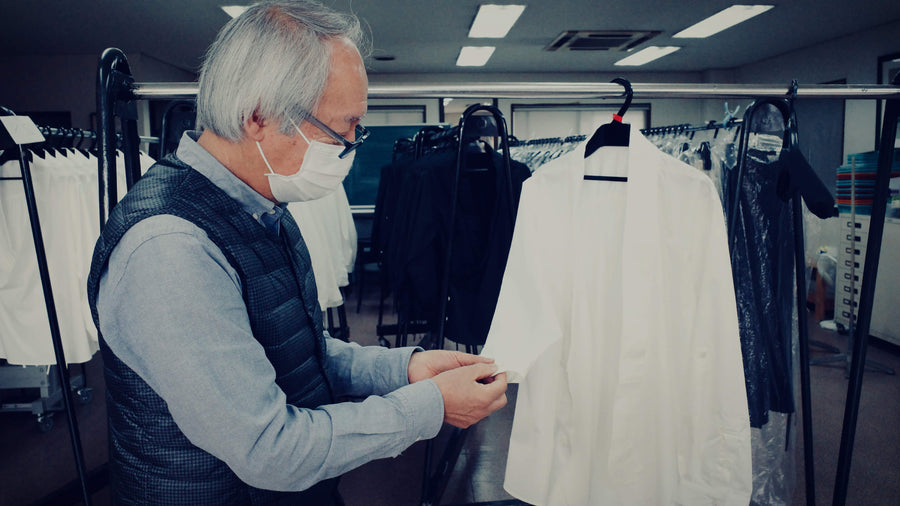
Jacket, Shirt and Pants can each be a different size. Choose what fits you. The KASANE double collar is included at no extra cost.
Cards · Shop Pay · Apple Pay · Google Pay · USDC / SOL via Solana Pay
Worldwide shipping and import duties included.
For approved destinations, the displayed price includes international shipping, customs duties, import taxes and ordinary customs handling.
This is common size for both Japan and all world. It's KUDEN original size chart. It may be bigger or smaller usual clothes so please make sure you check the size chart before order.
The Ensemble is three garments. Each one can be a different size.


02 — The Ensemble
Jacket, Shirt, Pants — the structure of kimono translated into three modern pieces. This is Samurai Mode.
Together they complete the look. Separately, each one goes with what you already own.
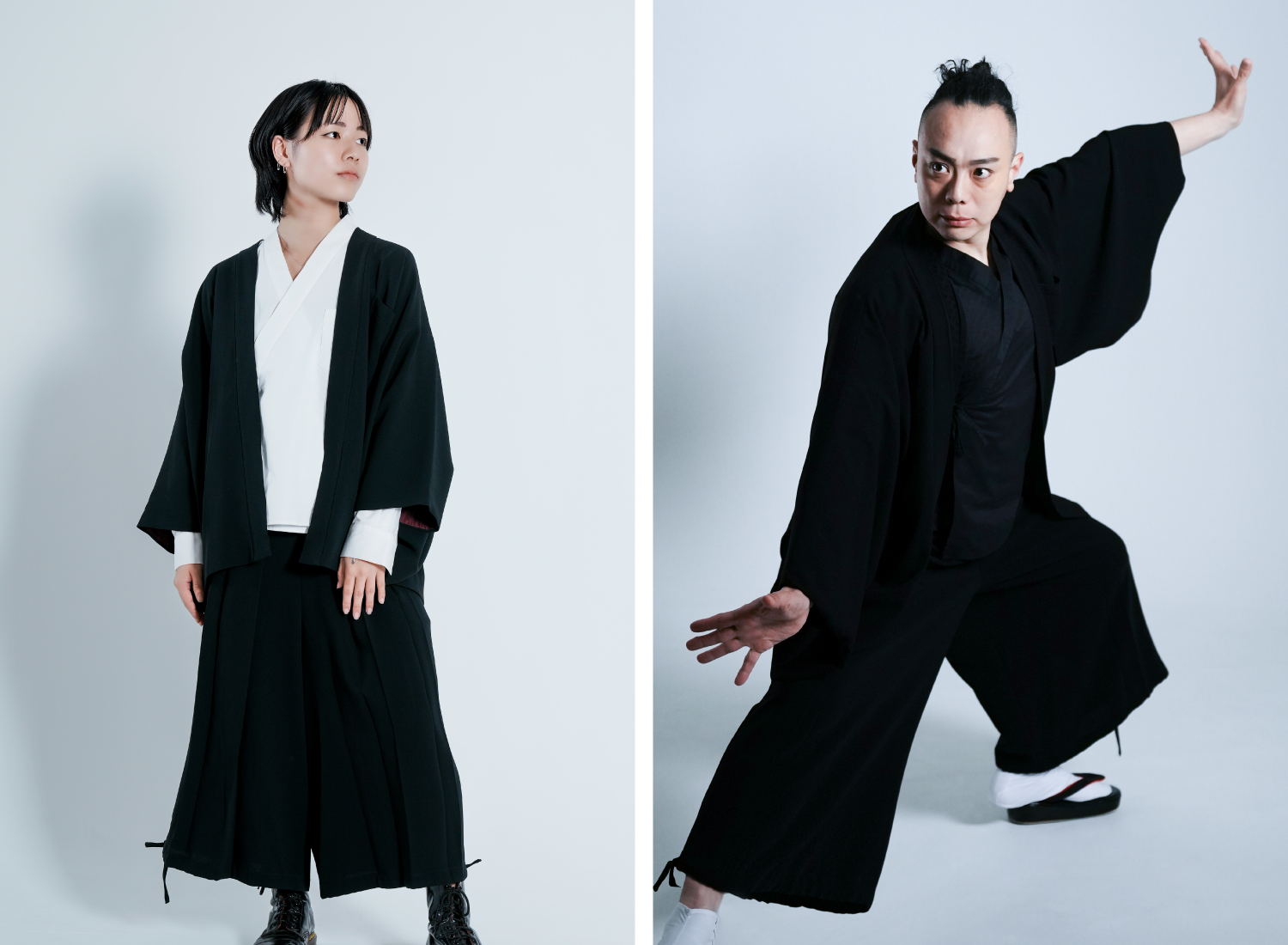
The straight line of haori, for how people layer now.
See the Jacket on its ownThe quiet of a kimono collar, worn alone or layered.
See the Shirt on its ownThe volume of hakama, with the adjustability a modern day needs.
See the Pants on its ownDetails
A traditional haori can be closed at the front with a cord. The small loops that hold that cord are called <em>chi</em>, and we carried them into the Samurai Mode Jacket. Use a traditional haori cord, or fit a chain or a piece of jewellery you like and make the front your own. Japanese or Western, formal or relaxed — the same jacket goes either way. Wear it as no one else does.
However sharp a design looks, it is not good design if it is uncomfortable to wear. So we brought <em>miyatsuguchi</em> into the jacket — the opening left between the side seam and the sleeve, unclosed by the outer cloth. It is an old construction, found in kimono for women and children; one account holds that it was there for children who move constantly and for women whose kimono shifts at the chest. Men's kimono does not have it. Choosing it anyway opened a path for air, and made the jacket lighter and cooler to wear. With less tension across the side, the arm moves further and the shoulders lose that stiff, braced look. Removing cloth from under the arm also cuts the bulk, so the shoulder line reads slimmer. Even in a room where the meeting matters, it holds you with air moving through it and a measure of ease.
Kimono, the garment this comes from, has no pockets. Modern days do not allow for that, so we gave the jacket three. One sits at the left chest, cut to take a pocket square in the manner of a Western formal jacket, so the piece holds up in a formal room. The other two are inner pockets, left and right. For the meeting where cards are exchanged, and equally for the day off with music in your ears — it was designed to come with you, not only to occasions.
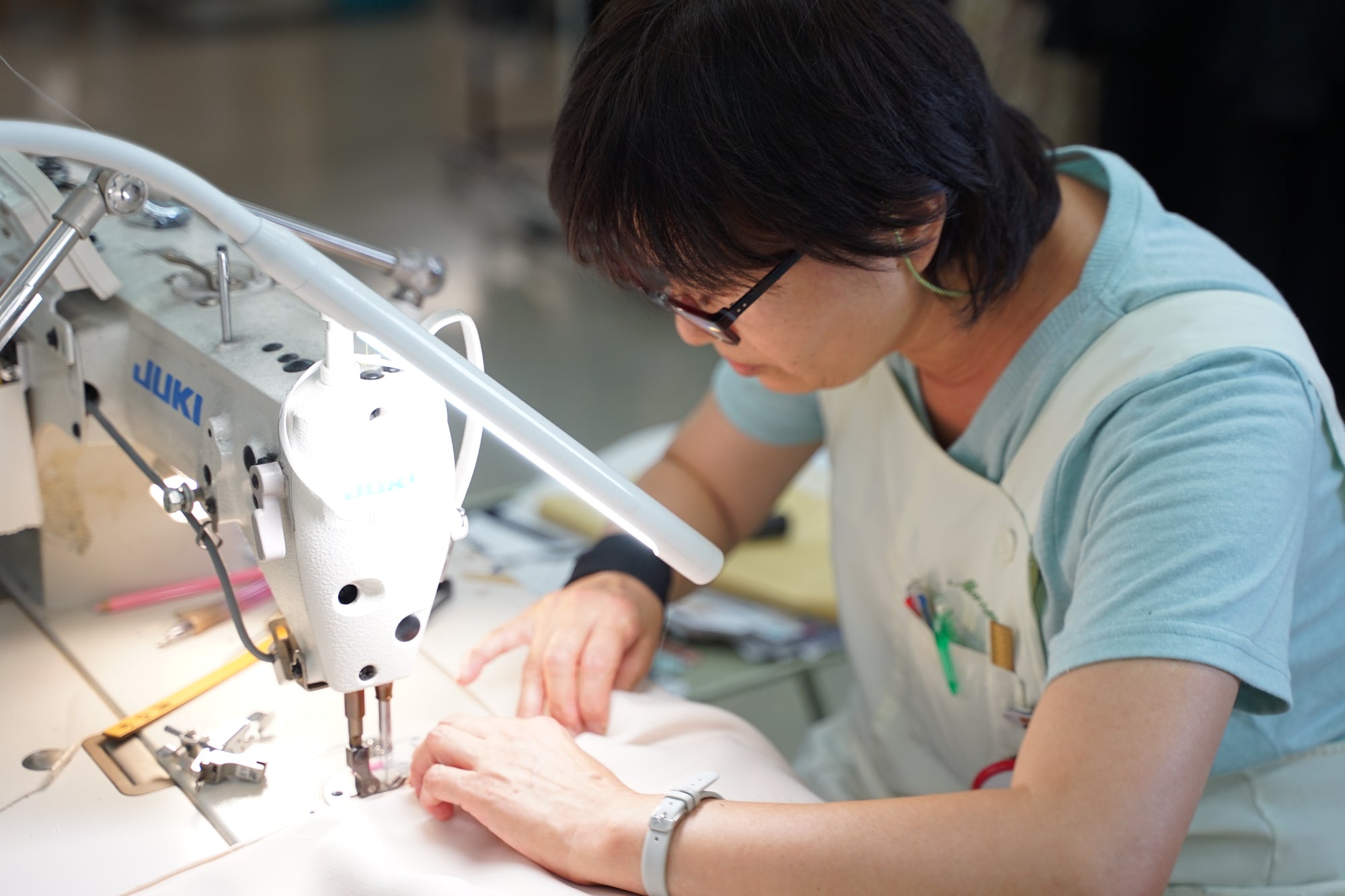
04 — One Artisan / Made with time
Not a production line.
A single artisan sews the garment through to the finish — collar, sleeve and hem carried by the same person. Few people are left who can take a garment that far alone.
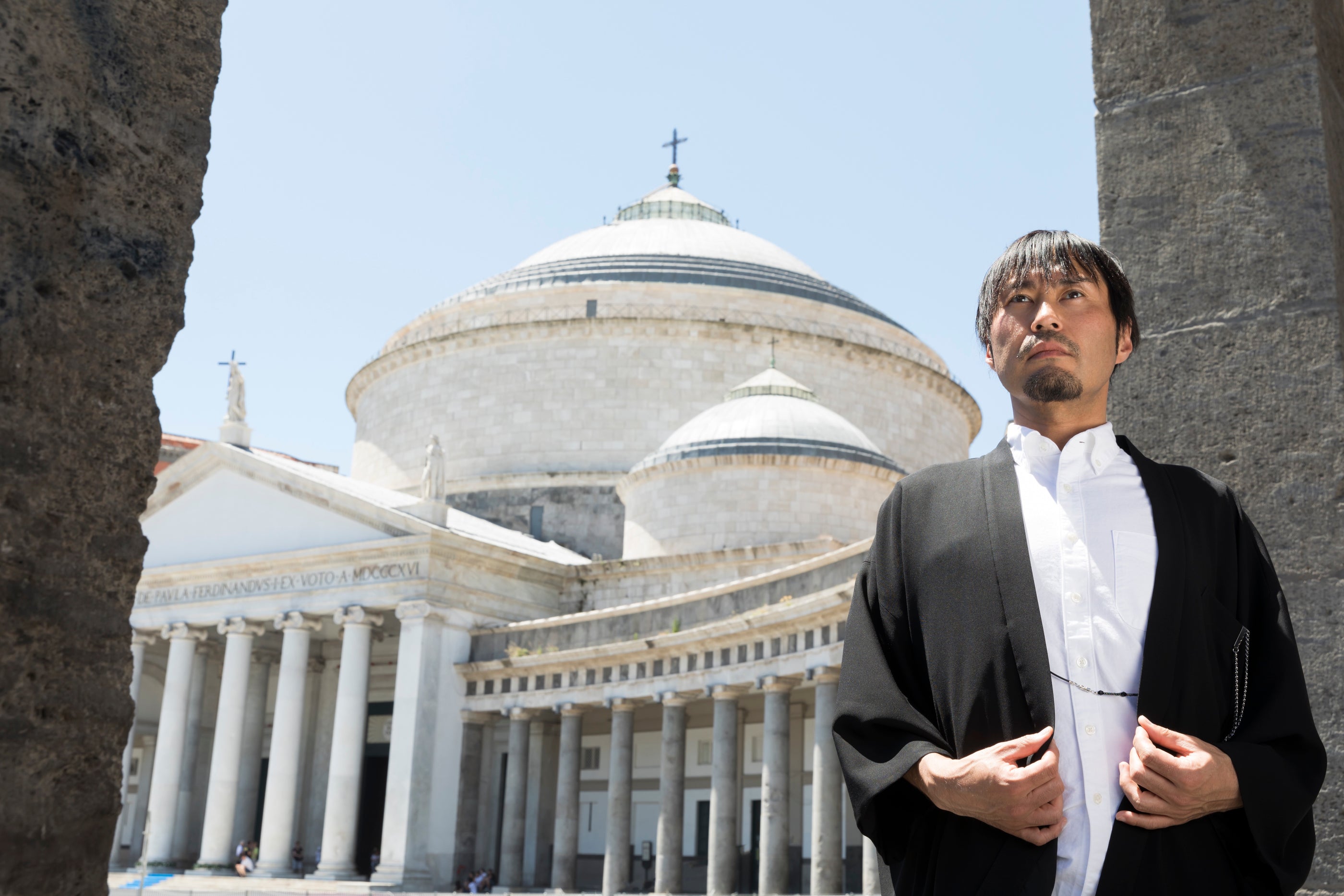
City / Journey / Ceremony / Everyday
See The Ensemble across different rooms, bodies and ways of wearing it.
Explore the Lookbook