
Artisans — The Hands Behind One Garment
One garment
becomes one person's work.
The first line from KUDEN by TAKAHIRO SATO never moves down a production line.
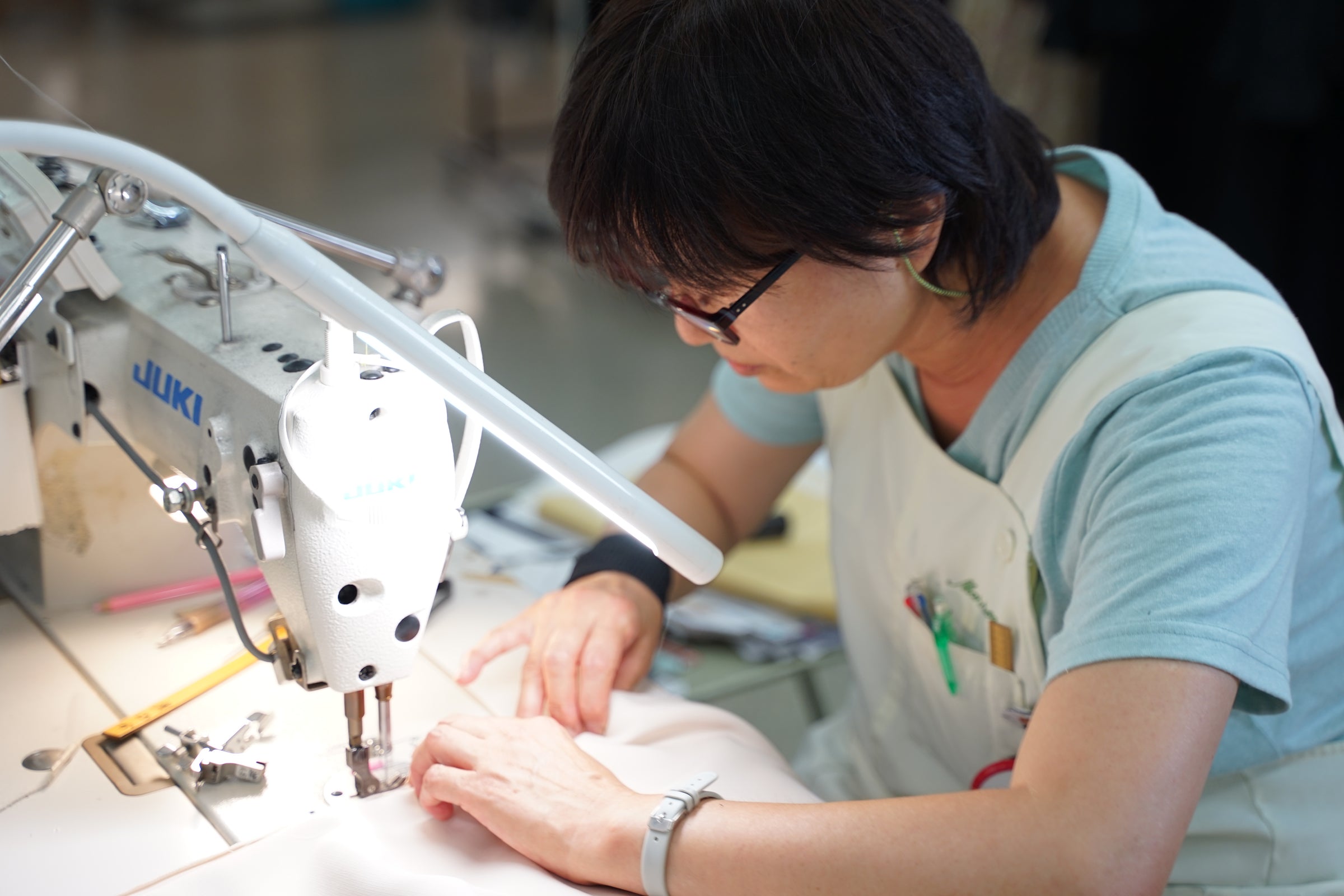
Your garment is begun after you order it, and one artisan sews it from beginning to end.
One by One
Japan Design
Japan Fabric
Japan Sewing
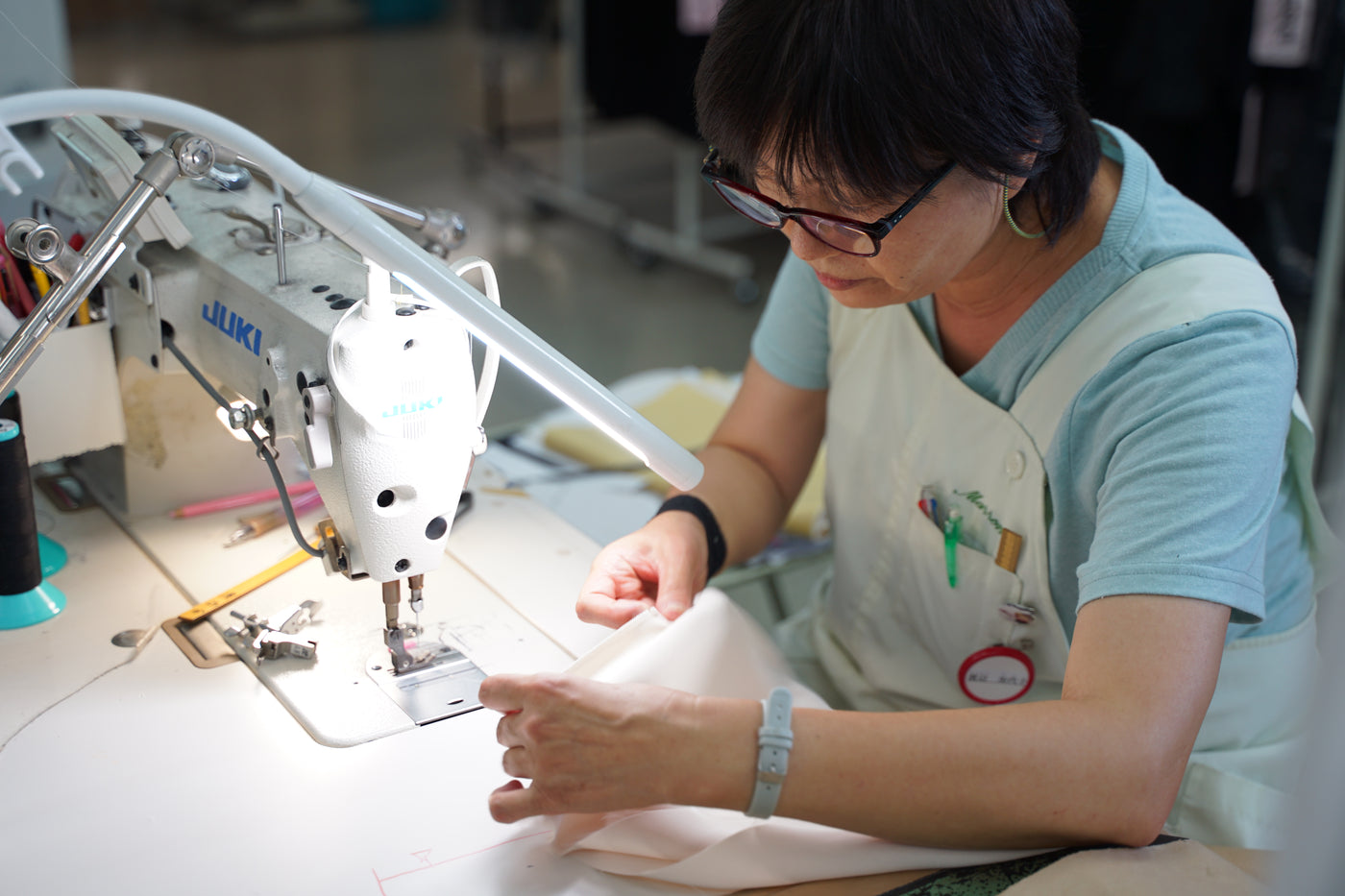
The sewing is never divided among several hands. One artisan sews each garment from beginning to end. KUDEN calls this maru-nui. Your garment is built one stitch at a time.
- Made only once ordered.
- One garment, finished by one person.
- Japanese design. Japanese cloth. Japanese hands.
Made in Japan
Not kimono,
made to keep kimono alive.
It sounds like a contradiction.
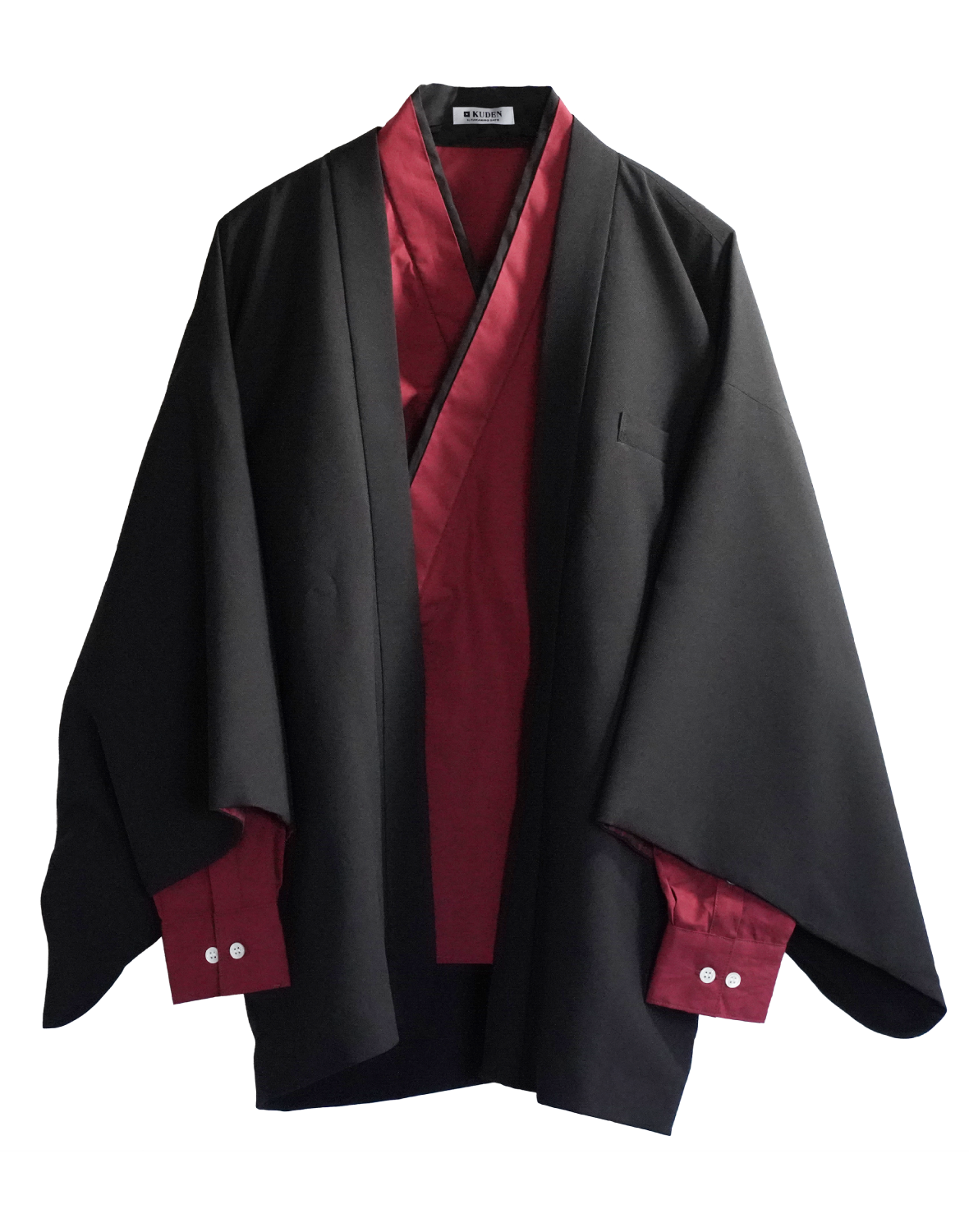
But if fewer people have occasion to wear kimono, then let them meet the Japanese sense of beauty through clothes they can wear now. One garment can become a doorway into kimono.
Kimono tailoring, Western tailoring — neither survives without work.
No work, no one to pass the skill to.
Skill does not survive in a record.
It moves from one pair of hands to another, inside the work itself.
There are cheaper ways to make clothes, and faster ones.
We still use fabric made in Japan and hands that sew in Japan.
Not to decorate the words 'Made in Japan'.
To keep the work alive, and hand what is in those hands to the next generation.
One garment.
One artisan's work.
Why Made to Order
Made to order is also
a system built for the maker.
What KUDEN does is one step toward ending mass production and mass waste. We will keep doing what it takes to leave kimono culture, and the skill of the artisan, to the next generation.
And After
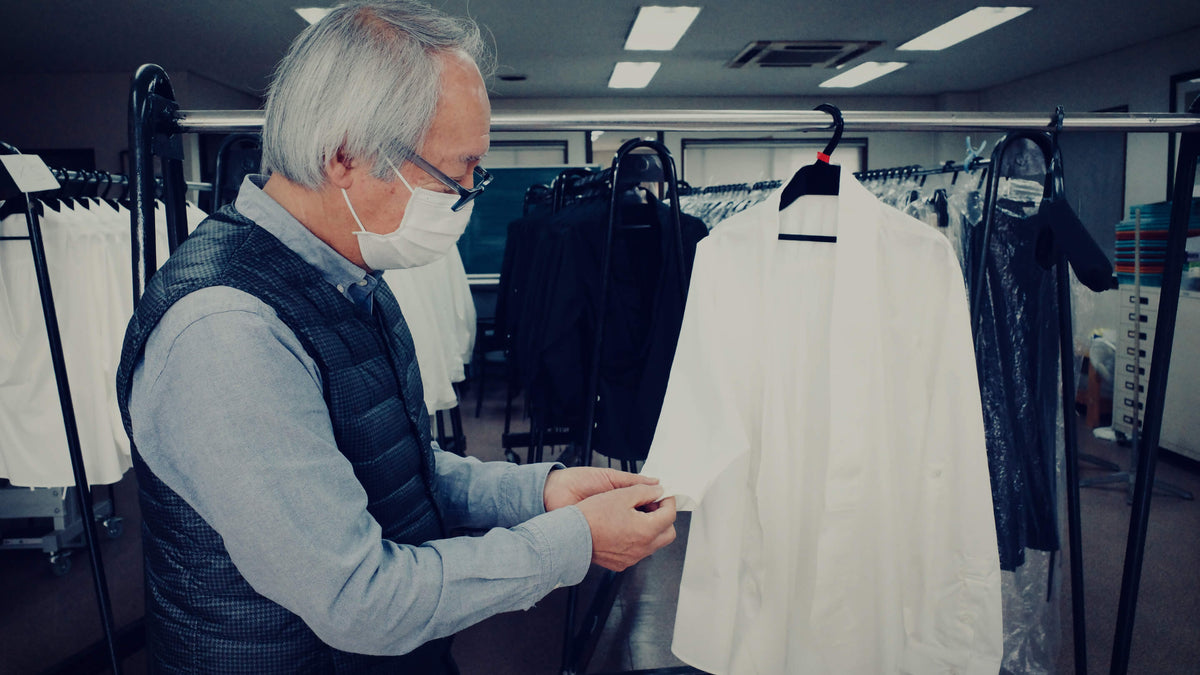
Inspected by those who have
spent their lives sewing.
Nothing goes straight from the machine to you. A former factory head and the artisans who worked there look at every garment, press it, and only then send it out.