


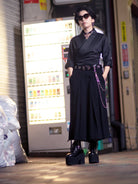
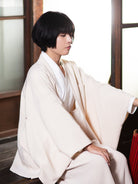

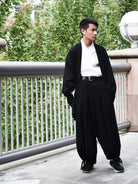
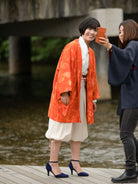

Together —
into Samurai Mode.
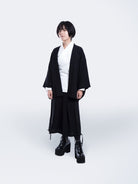
Collar, sleeve and hakama lines join into one. No dressing ritual — Samurai Mode is cut for a modern body.


We settle the final size with you by email after you order.
Cards · Shop Pay · Apple Pay · Google Pay · USDC / SOL via Solana Pay
Worldwide shipping and import duties included.
For approved destinations, the displayed price includes international shipping, customs duties, import taxes and ordinary customs handling.
| Material | Face side: 70% triacetate, 30% polyester Inner side: Lining: 100% cupro |
| Care | - Recommended the dry cleaner. - Use filter cloth. |
| The place of production | Made in Japan |
This is common size for both Japan and all world. It’s KUDEN original size chart. It may be bigger or smaller usual clothes so please make sure you check the size chart before order.


02 — The Pants
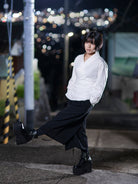
The vertical fall of hakama, redrawn for a modern body and an ordinary stride.
03 — Samurai Mode
Jacket, Shirt, Pants. When their three straight lines meet, a contemporary silhouette rooted in Japanese dress emerges.
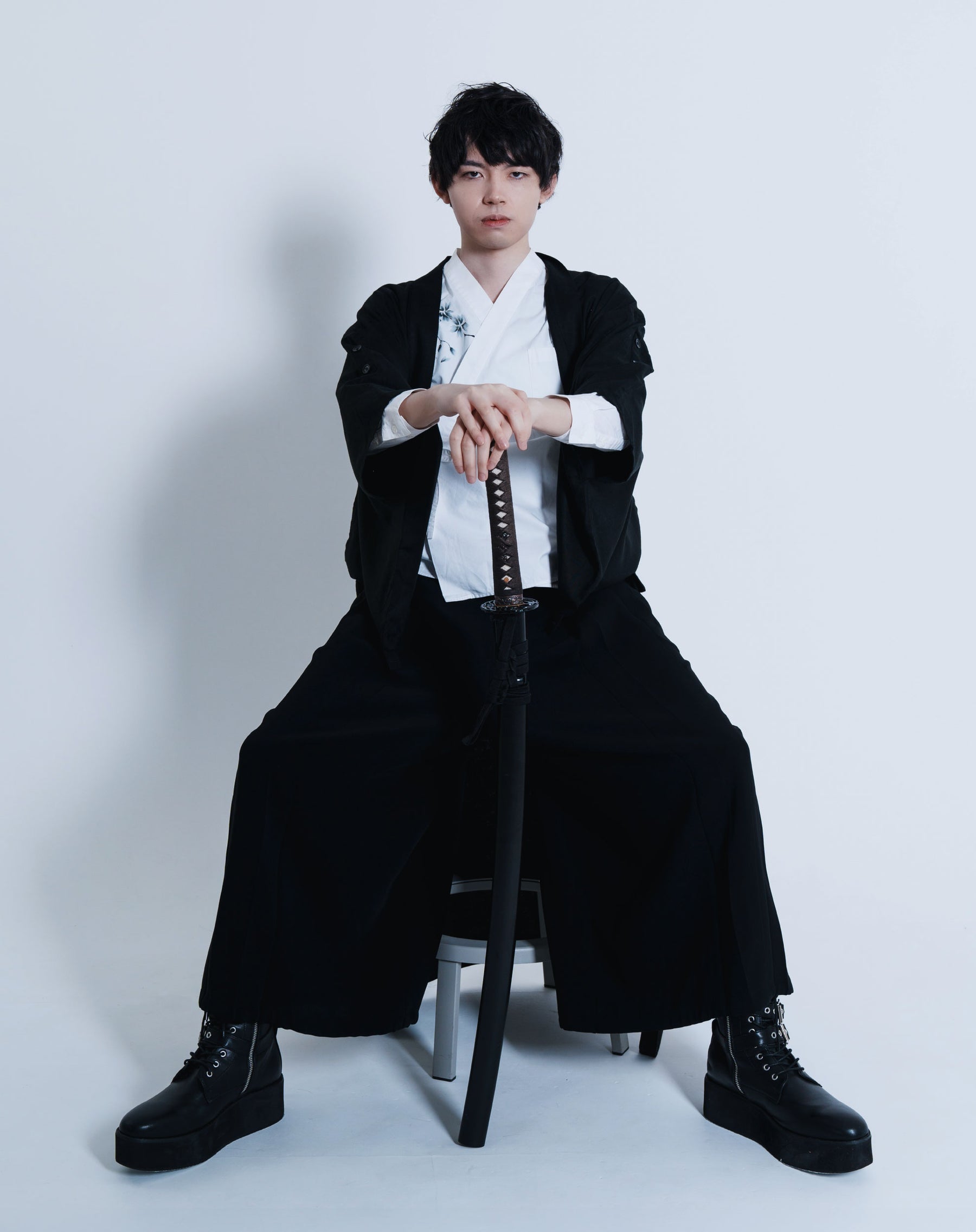
Collar, sleeve and hakama lines join into one. No dressing ritual — Samurai Mode is cut for a modern body.
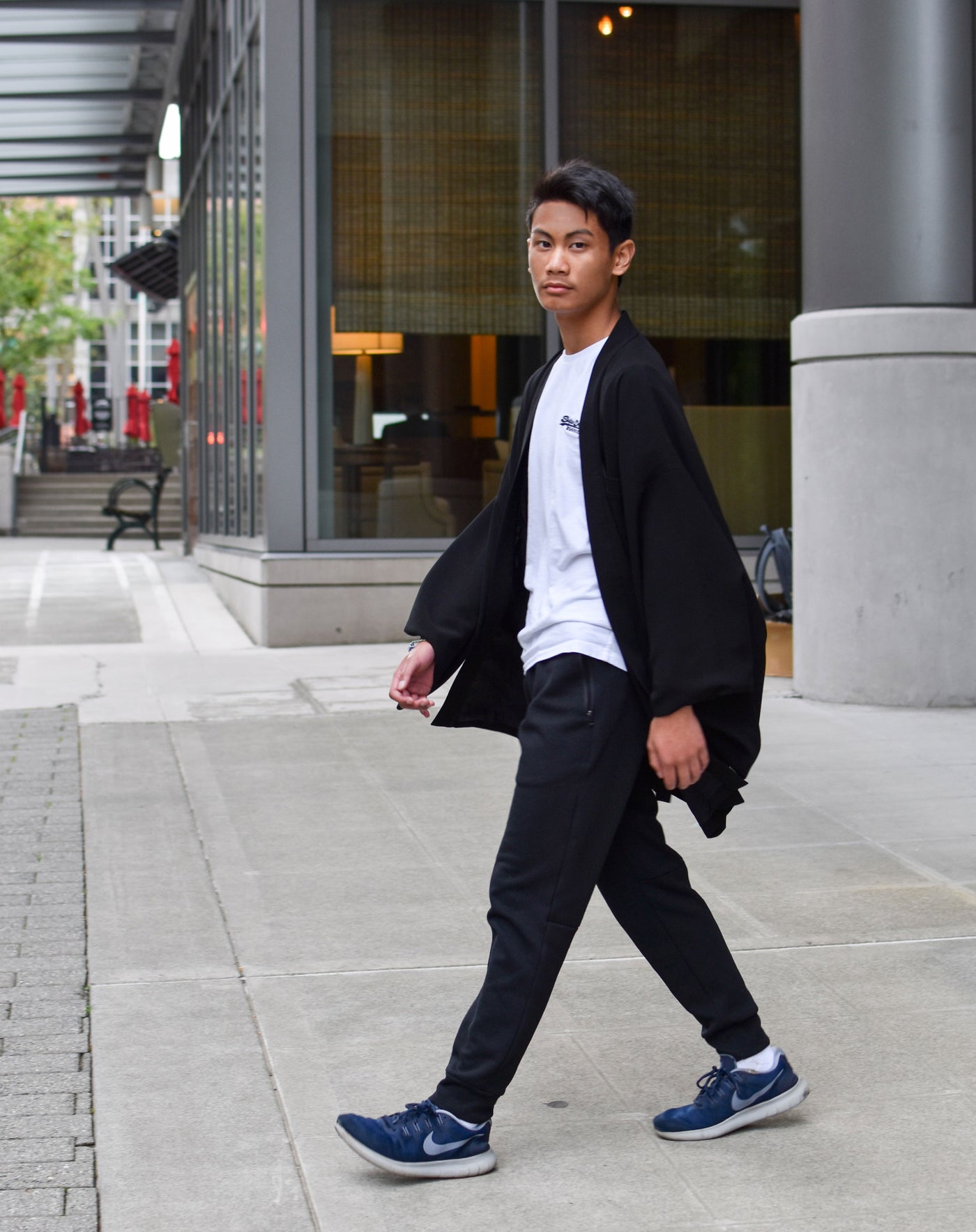
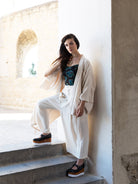
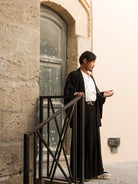
Wear the Pants alone, with a T-shirt, a shirt, a jacket. It does not close itself off as traditional dress; it enters your wardrobe one piece at a time.
Details
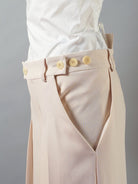
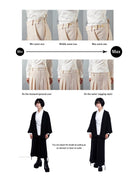
Three buttons at the waist change the width. No belt needed. Wear them at the hips or at the natural waist — the same pair does both. They suit most builds, and how tightly you set them changes the silhouette.
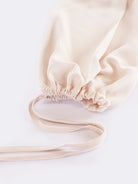
There are cords at the hem. Left loose, the leg spreads like a hakama; drawn in, the line goes clean and narrow. Hakama Style or Ninja Style, chosen by the day and by what you wear with them.
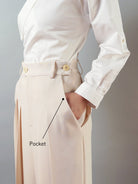
By tradition a hakama has no pockets. We added one on each side to suit how people live now. They take a phone and the small things you carry.
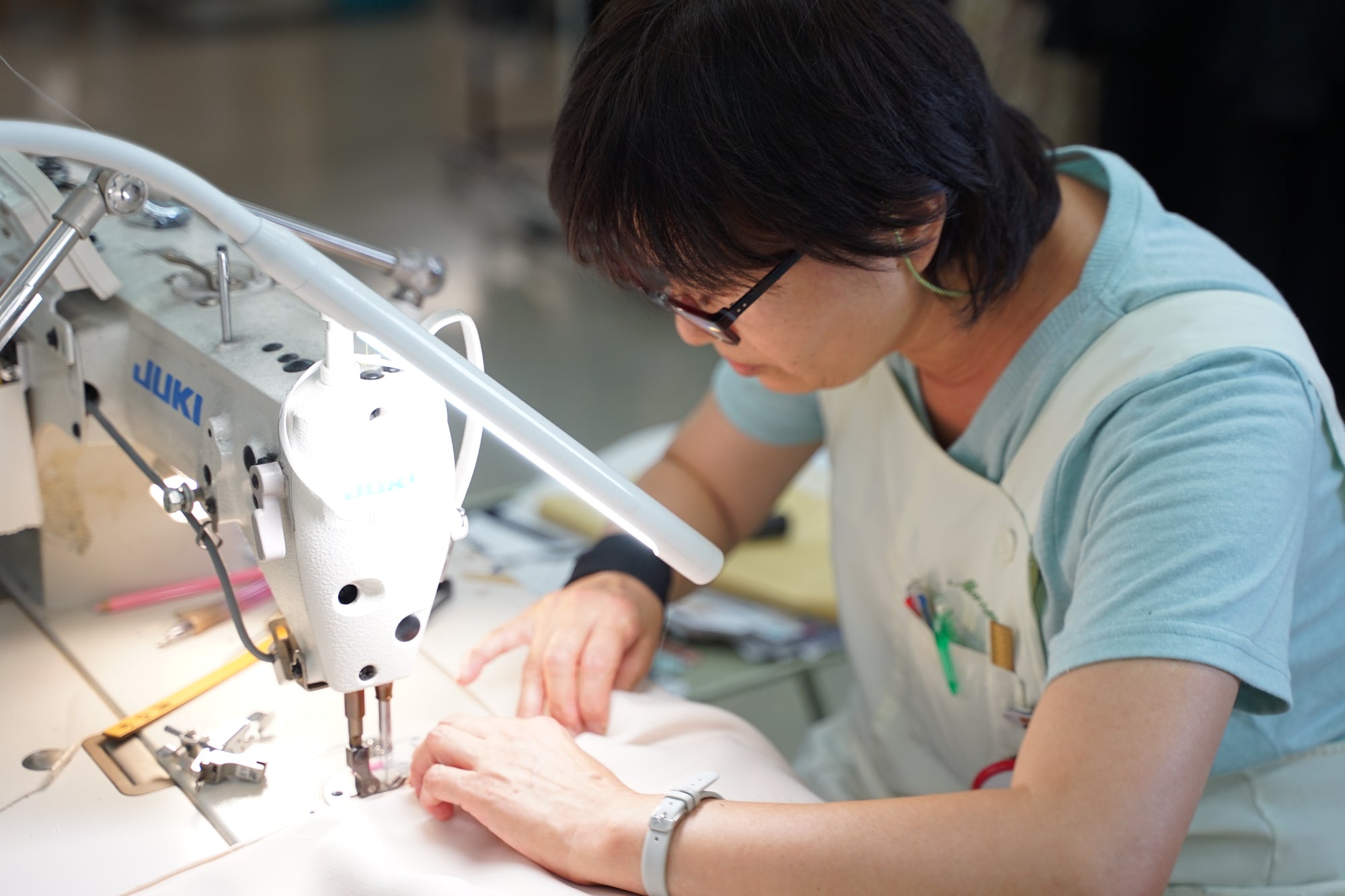
04 — One Artisan / Made with time
Not a production line.
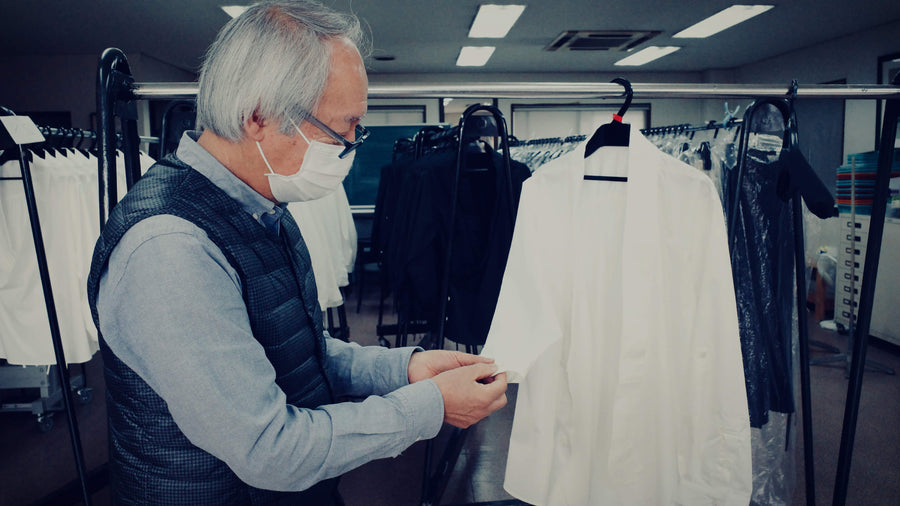
A single artisan sews the garment through to the finish — collar, sleeve and hem carried by the same person. Few people are left who can take a garment that far alone.
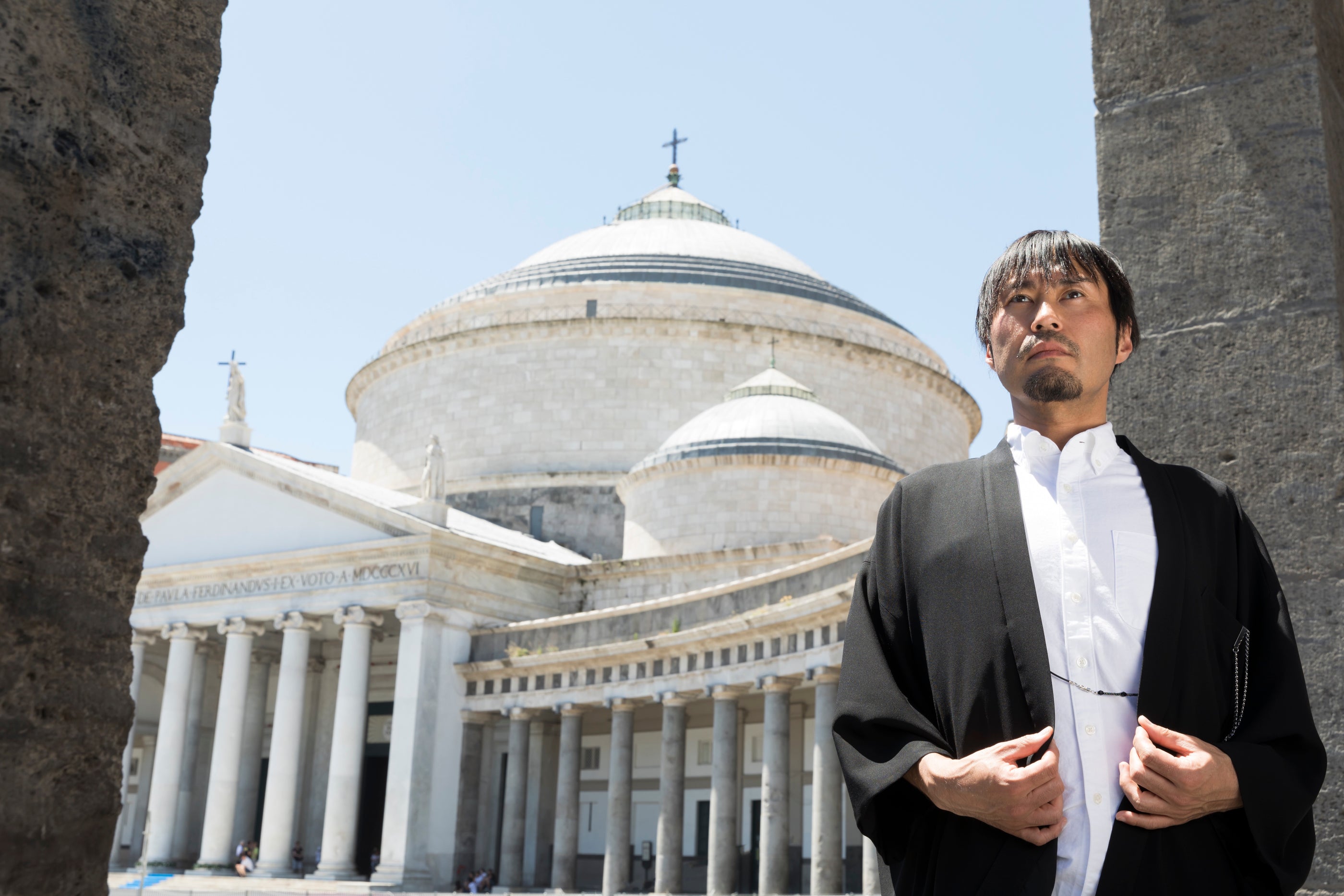
City / Journey / Ceremony / Everyday
See The Pants across different rooms, bodies and ways of wearing it.
Explore the LookbookSamurai Mode Pants II: a hakama-inspired design
How Samurai Mode Pants evolved into Pants II, and what changed.
This is Tak, the designer.
Thank you for wearing KUDEN, and for supporting my hope of creating employment opportunities for people with disabilities — work I intend to do alongside my son.
Samurai Mode Pants II adapt the structure of hakama to how people live now. The fabric was chosen at the design stage to make a supple, comfortable pair.
As the name suggests, this is the second generation of the design.
KUDEN releases a design when we believe it can be worn for ten years, rather than following the season. We also keep improving a design after release, based on customer feedback and on the garments themselves. The Samurai Mode Shirt and these Pants have both been through that.
How Samurai Mode Pants evolved into Pants II
The biggest difference between the original Samurai Mode Pants and the Pants II is the waist adjustment.
Two pieces of customer feedback led us to it.
The first came from a customer with a martial arts background who had bought the original Pants. They asked whether we could make them sit at the hips, as traditional martial arts hakama do. This would bring them closer to the way traditional hakama are worn, while making them easier to wear and move in. The original Pants were worn at the natural waist, like conventional trousers.
The second was from someone who wanted to wear them but could not, because the trousers would not pass comfortably over the hips — even though the leg and waist measurements fitted perfectly.
We could not see a single design that answered both.
We borrowed the deep side openings of traditional hakama. They open wide enough for the trousers to pass over the hips, then close securely around the body. The openings extend to the waistband, where three button positions adjust the fit, allowing the same pair to be worn either at the hips or at the natural waist.
After several months of sample sewing and trial and error, Pants II emerged.
The three-button waist adjuster lets you wear Pants II either at the hips or at the natural waist.
Tying the hems with their cords — a feature carried over from the first generation — changes the silhouette from Hakama Style to Ninja Style, recalling field hakama and sarouel trousers.
Because of this, the silhouette and the way you wear them change with your mood and the rest of what you are wearing, keeping them versatile over time.
KUDEN’s clothes are made by highly skilled sewing artisans in Japan, and we pay fair rates for their work rather than driving prices down, so our prices are inevitably higher.
So we put everything into the design, to make something whose cut and cloth you will not tire of.
Together, the two waistband positions and two hem silhouettes create four ways to wear one pair:
• Hakama Style, worn at the hips
• Hakama Style, worn at the natural waist
• Ninja Style, worn at the hips
• Ninja Style, worn at the natural waist
Other features
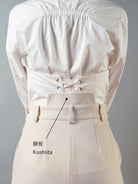
Hakama-inspired koshiita detail
We took the koshiita — the stiffened back panel of a hakama — as an accent. It is made in a soft material, so it does not dig in when it sits against your back.
Pockets
Traditional hakama do not typically have pockets. We added one on each side to suit how people live now.
KUDEN’s clothing is designed to be worn in Kimono Style and equally with the clothes you already own. It is made to bring tradition and innovation together.
Build your own way of wearing it. We would be glad to hear how you do.
Designer
Tak